Showing posts with label Book Reviews. Show all posts

7.13.2012

harry potter party


We finished Harry Potter and the Sorcerer's Stone this week. Movie time! We made a day of it. This worked out well for me. When it is a million degrees outside and too hot to even enjoy swimming for very long, it is a welcomed distraction to have inside projects to work on. The G's helped me make pumpkin pasties in the morning.

Once Eden was down for her nap, they spent the afternoon blowing up and then coloring balloons. We did red and white ones (because we didn't have maroon and gold) to celebrate Griffindor's winning of the house cup. 


During the movie we dined on ciabatta reuben melts (an ode to the corned beef sandwiches Ron has on the Hogwarts Express), traditional veg, pumpkin pasties, and butter beer (even though it doesn't pop up for another book or so.)

Grace is begging to get to the book store... Maybe we can get through Chamber of Secrets before summer is out. :)


2.03.2011

books I finished last year

It has been nearly a year since I posted a reading report. And it has been just about as long since I read a few of these books. Consequently, the following reviews will be brief, but will be comprised of the gems that have stuck with me from each. Better late than never, right?

Three Cups of Tea, Greg Mortenson and David Oliver Relin
It took me a while to get into this biography, but I found it very inspiring. I admire people who throw their whole hearts into their situation, particularly when that situation isn't something they would have chosen for themselves. Here is a man who saw a need and went at it full boar. I also really REALLY like the idea of fighting terrorism with education as well as equal educational opportunities for girls. Mortenson has started quite the movement. You can read about it here.

The Catcher in the Rye, J.D. Salinger
When Salinger died last January there were a lot of biographical and editorial segments done about him on the podcasts I listen to. Catcher in the Rye is a book I have heard about forever but had never read. I knew that it was the handbook for every serialistic creep and outcasted teenager out there, but didn't know a thing about what it was actually about. Reading the book was interesting. Stylistically it is a masterwork. Written in stream of consciousness the reader is given full access to Holden. It felt like having a 200 page conversation with somebody. The book is completely laced with (unemotional) profanity. The story itself is quietly tragic. I'm glad I read it as an adult. I have often wondered why a person will completely self-destruct when presented with an opportunity to prove him/herself. Holden, the protagonist, argues that he doesn't care, and that he doesn't believe in proving himself to 'phonies.' What I read between the lines was a lonely boy who doesn't like himself and can't believe that anybody else would. He dismisses nearly every genuine feeling he has and talks himself out of any intimate connection. And yet his dream is to be the 'catcher in the rye' the man who keeps all the playing children from getting too close to the cliff. He wants to protect and to be admired. I felt like I came to understand a few people in my life a lot better by seeing the world through Holden's eyes. It is certainly not a read for everyone. I am astounded that there are teachers out there who encourage putting this book in the hands of middle schoolers. I think most of the high schoolers that pick it up are not equipped with the life experience to properly understand it. (Hence the handbook statement before...) I don't think I'll ever pick it up again, but I'm glad I read it.

East of Eden, John Steinbeck
This is one of my favorite books and I hadn't read it for 5 or 6 years. I picked it up in the midst of our hectic relocation last summer and finished it at the hospital just an hour before we had our Eden. Everytime I read this book, I take something new. This latest read was particularly well timed. Towards the middle of the book , there is a discussion about the scene that takes place in the Garden of Eden. It is pointed out that in the original Hebrew text, God uses the word timshell (translated thou mayest) as he gives instruction to Adam. He gives Adam the freedom to choose. This is a huge theme throughout the book, in fact the last word of the book is timshell. It was a good reminder to me during last summer that even when I feel that so many things are not in my control that I always have a choice.

Wind, Sand, and Stars, Antoine de Saint-Exupéry
I became familiar with Saint-Exupéry in my collegiate French classes reading Le Petit Prince in its original text. I had no idea how many other works he had published. In the college of humanities alumni magazine that comes from time to time, there is a book recommendation page, and this book was highlighted by several contributors. I ordered it with some birthday money and Cori was the first to read it. He was moved and really enjoyed it. I had a similar reaction to the book. It is the memoir (and we don't know how exactly autobiographical it is, some of the stories are pretty incredible) of Saint-Exupéry's experiences as a French mail currier after the war. Though he is always talking about planes, pilots, and the elements that have to be respected by both, you can't help but feel that the subject matter is so much more universal. The translation is gorgeous. There were several passages I read over and over because the language and imagery are so beautiful. With the help of all the great aviator to gospel comparisons we get from President Uchtdorf, this book read as a very spiritual metaphor to me.

3.26.2010

what we'll be doing next week

A Christ-Centered Easter Janet and Joe Hales

This book was gifted to me by a great friend I made while on my mission. It sat on our book shelf until last year when I thought Grace was old enough to start understanding more about Easter. It has day by day activities and stories to teach about each day of the Easter week from Palm Sunday: Jesus' triumphal entry to Easter Sunday: Jesus' resurrection and appearances. The activities are also labeled by level of age appropriateness. There are recipes, scripts for plays, scripture readings, songs, and supplemental stories. The last half of the book is a parallel account of the gospels. It isn't as detailed as the Harmony of the Gospels that you can find in your Bible dictionary. But it has the actual verses next to each other (not just the references) and is pretty useful for studying the events of the Easter week.

We had a really great time going through the book last year- and I've been looking forward to next week for a while. My parents are coming out for a visit and will be here for our passover/Jerusalem dinner as well as our modified version of the 'plan of happiness treasure hunt'. Though I am very grateful for the interest the real estate market has given our house, I'm kind of hoping we'll have a bit more time at home next week.

Anyway, this book comes highly recommended! Here is a peek at the table of contents (you can click on it to enlarge):

1.14.2010

Reading Report

Undaunted, Gerald Lund
This is the newest Lund book focussing on the stories of the Hole-in-the Rock Pioneers. I had never heard these pioneer stories before. They were a group of saints called to leave St. George and build a settlement on the outskirts of civilization in Arizona. Their purpose there was to serve as a buffer between settlers both within and without the church population and the native americans who were becoming increasingly (and, in my opinion, understandably) more hostile as they were being forced off all their land. Because of the danger posed by the native american tribes in the area, the saints had to travel a very round about route to get to their destination. They literally blasted their way through the red rock of southern Utah, and at one point, built a dirt road along the side of a cliff. I found the actual history in the novel quite fascinating. BUT, it was over 800 pages long. I haven't really read Lund's work before, but I was pretty unsurprised to find the enivitable plot devices usually found in these kinds of books- the convert story, the obvious (as in, predictable from the reader's first introduction to all the characters) love triangle, and the tidy ending including a wedding and the whole crowd lifting their arms to heaven and shouting glory to God! All that said, Lund's research is very impressive. There are pages of notes at the end of each chapter where he makes clear which parts of the narrative are history and which are of his own devising. And, the first few hundred pages of the book take place in the coal mines of northern England, which kinda got me hooked on it. I felt like I learned a lot about these brave pioneers, even if some of the telling of their story seemed a bit corny (in my humble opinion).

Peace Like a River, Leif Enger
I LOVE THIS BOOK. It is really so good. I tried telling everyone I could about it while I was reading it. Whomever I was talking to would ask me, "Well, what is it about?" To give any kind of plot summary about this book is to make it sound like the dreariest and most depressing story ever written. I've decided that what makes the book so magical is how all the characters live through the misadventures that come their way. I smiled my way through most of it, I'm sure. The characters are meaty and very unique. The story will lift the spirits before it is through. This is a book I would recommend to anyone and will read again and again.

Pirate Latitudes, Michael Crichton
This was a quick read. It felt like reading a very gritty version of Pirates of the Carribean. Many of the locations were the same- Port Royal and Tortuga... The time period was the same. A lot of the same seamen's myths were present- the gloriously huge craken (giant octopus) makes an appearance, and the governor's niece is nearly thrown overboard during a storm because it is bad luck to have a woman on board. The story and characters seemed a little thin for Crichton's standards- but I have since learned that it was a posthumous publication- so perhaps he wasn't finished fleshing it out before he died. In anycase, my favorite parts of this read were the executions of the detailed and daring plans wherein something always goes not-as-planned and all is nearly lost only to be saved by the cunning hero. True to Crichton's style, it read like a movie. It is a book that is not for everyone- it is a bit gory and there is some sexual content. But it is an adventurous swashbuckler for certain.

The Life of Our Lord, Charles Dickens
I was very surprised by this little book. It was originally written by Dickens for his children. His youngest son, Sir. Henry, stipulated in his will that upon his death the manuscript could be published if the rest of the family was in accord. It was first serialized in London in 1934 and then later published into a book. The manuscript was handwritten and all published versions of it have included Dickens's irregular capitalizations and punctuation. It makes the book feel more personal to me. I only learned after reading it that this was a favorite of our late President Hinckley. He said:
All of us love Dickens's immortal A Christmas Carol. But The Life of Our Lord, written in a very personal way, without adornment or flights of fancy, for the children he loved, carries with it a compelling admonition that has within it the power to change the world: "Remember!-It is christianity TO DO GOOD always- even to those who do evil to us."

President Hinckley was in England at the time of the manuscript's serialization there, and then later his wife bought a copy of it and they read it often as a family. It is a wonderfully compact narrative of the life of Jesus. All the details that are known of his mortal life through the Bible are woven in. All the miracles, all the parables, all the conversations are there. I actually learned a few things. I highlighted sections that didn't sound familiar to me and then went to my scriptures, and sure enough, they were founded.

From a literary perspective, there were a few things I really appreciated. It is very simply written. Dickens, who has such flare for characterization, left the character of the Savior alone and let Jesus' actions and teachings define him. Also, throughout the book, he gives little admonitions to his children. At one point he asks them if they have ever seen a camel, and if they had not seen one, he would take them. I thought it was so cute. Anyway, in these paragraphs he instructs them never to judge anyone who is poor or mean, because maybe they never had anyone to love them or teach them the right way. Maybe they never had enough to eat or a place to live. He reminds them that these people were most important to the Savior and so should they be to us. During these paragraphs a little parade of all Dickens's protagonists was floating through my mind. His signature rags-to-riches and redemptive style of character transformation has a deeper significance in my mind now that I know that it was his faith in the Lord that made these kinds of developments possible. I have ordered a copy of the book and hope to make it part of our family tradition to frequent it. It is a wonderful Christmastime read.

9.15.2009

summer reading

Art Held Hostage: The Battle Over the Barnes Collection John Anderson
I'm not entirely sure why I picked this one up. I think I was craving a documentary with narrative flair. David McCullough kind of stuff. This book was more like a 237 page newspaper article- interesting at parts, but not narrative at all. So unless you have a sincere interest in the Barnes Foundation, the origins of the silver nitrate treatments that are put in the eyes of our newborns, or the life of a very aggressive businessman/art collector/philanthropist, I would not recommend this particular read.

The Great Gatsby F. Scott Fitzgerald
I first read this book in the 8th grade. All I could remember about it was that there was Gatsby and a girl named Daisy. And that someone gets run over by a car. It was past time to revisit the novel. I loved reading it again. It was new and fascinating through my adult eyes. The novel was written as a reaction to the economic boom of the 1920's. Fitzgerald contrasts the public fascination with money and glamour with warnings about the lack of morality and the extreme materialism that accompany such admiration. The themes and warnings of the novel are, to me, remarkably pertinent to society today. And I too am fascinated with the glamour of the 20's. Descriptions of the fashion, the cars, the parties, the mansions... mind candy, all of it.

The Guernsey Literary and Potato Peel Pie Society Mary Ann Shaffer and Annie Barrows
My mother-in-law lent me this book and I got hooked almost immediately. It is definitely in the running for being my favorite read of the year. The story is set in post WWII England. One of my favorite aspects of this time period selection is that the authors explore the hardships of rebuilding after the war. Many WWII chronicles end with the victory and cheering of D Day. But this story uses the end of the war as a beginning. It suggests that, in many ways, putting the pieces back together after the war was as hard, if not harder, than living through the war. It has a bit of everything: a very eclectic group of characters, love stories (without any love scenes), unexpected friendships, literary reviews, history, geography, anatomy (one of the characters pursues the art of reading ones future by examining the topography of the skull), wit, and just enough real-life ugly stuff. That it is about a writer living in London during the 40's was enough for me, but I was very surprised by how much I loved this book.

The China Study T. Colin Campbell, Ph.D.
I borrowed this book from a friend at Church. It is about the process and results of testing that have been done connecting diet to disease development and treatment. In general, the studies conclude that there is a strong correlation between meat and dairy product consumption and the acceleration at which cancers and other diseases present and grow. In other words, if you have genetic disposition for cancer or diabetes, you are more likely to contract these diseases if you eat foods that are high in animal proteins. Furthermore, he concludes that diet regulation can reverse cancer growth. The book also delves into all the efforts that have been exercised to keep this information from the general public. I learned a lot of new things, about amino acid absorption and protein production in particular, that have been very useful. We won't be going Vegan anytime soon. Remember, I'm married to Cori- a card carrying carnivore. But I have begun making some changes that are for the better. I'm learning to make more plant exclusive meals, and we are eating less cheese and less meat. Whole grains were already a priority for me. I couldn't help but think of the guidelines outlined in the Word of Wisdom- We should eat meat sparingly, eat all the herbs and fruits in their seasons, and that grain is the staff of life.

3.11.2009

what i've/we've been reading


The Phantom Tollbooth, Norton Juster
This is one of my favorite children's books. I read it every year or so. It is about a boy named Milo who is very dull and lazy. He receives a mysterious toll booth that takes him into a magical land. There he makes unexpected friends, explores strange places, and becomes a hero. It is full of witty quips. For example, expectations is an island to which one can inadvertently jump if he doesn't watch his words. 

This time around, I thought it would be fun to read it to Grace. She was very keen on the idea due to the princesses, Rhyme and Reason,  whom Milo is charged to rescue. The chapters are short and there are images on every two or three pages. A lot of the book is still over her head. She enjoyed it, but didn't always understand what was going on. We made it half way through before going back to our Beatrix Potter collection. Maybe next time.  

Angels and Demons, Dan Brown
I hurried to library to check this out when I learned that the movie is coming out in the Spring. It was a fast read, just like The Da Vinci Code. It is well researched and laden with art history as is typical to Brown's writing. I was worried that the story line would be some big Catholic Church-demeaning web. But it wasn't. And I found the pivotal discussions about the compatibility of religion and science refreshing. 

I WANT TO GO TO ROME and reading about the city's history and art collections left a pit of longing in my chest. One day we'll get there. I think the movie should be great. I'm predicting that Ewan McGregor will steal the show. (No offense, Tom.)

Teach Your Child to Read in 100 Easy Lessons, Siegfried Engelmann
Joanne recommended this book to me. She has done this program with three of her five children. I am anxious to follow her lead. Her kindergartner is currently reading Harry Potter, after all. This isn't to say that I'm pushing Grace to set academic records at her tender age. She started showing a lot of interest in reading, and I wasn't sure how to go about teaching her. We started out doing a lesson a day. As the lessons got longer, her attention span for them got shorter. So now we do 1 or 1/2 a lesson every other day or so. She focuses better. It has been rewarding to spend some one-on-one time with her in 'Mommy School.'

The method is the same as is used in the SRA program. When I told my mom about it, she asked, "Are you sure you want to be doing this?" I am a terrible speller and my kind mother has always blamed this on SRA. I told her that I wasn't too worried about it. Kids these days will always have access to a spell checker. And I'm banking on hopes that our kids have enough of their Dad in them. The man can spell anything and can spot a typo a mile away. It was always helpful and a little annoying to have him read my papers when we were in school. Back to the book, we are enjoying it so far. Grace is forever telling us what letter or sound a word starts with. Learning to read is already opening a new world to her.

Poems of Mao Tse-Tung, translation and notes by Hua-Ling Nieh Engle and Paul Engle
Cori chose this book on our last family trip to the library. I had no intention of picking it up. But then I ran out of books and had a hankering to read one night. It was more interesting than I thought possible. When I think of Chairman Mao, I think of titles like totalitarian and utilitarian. Not poet. Apparently, he was a man of many dichotomies. I don't know if what I read about him in this book made me think more or less of him. That he had great regard and passion for the arts is prooven in his mastery over the classical Chinese poetic form. It is very complex and embraces hundreds of rules. All of his poetry is crafted with precise and artful use of this form. Regarding art, Mao said, "Although man's social life is the only source of literature and art and is incomparably livelier and richer in content, the people are not satisfied with life alone and demand literature and art as well. Why? Because, while both are beautiful, life as reflected in works of literature and art can and ought to be on a higher plane, more intense, more concentrated, more typical, nearer the ideal, and therefore more universal than everyday life." This is, to me, a great definition of what art should be. 

However, as he grew in power and influence, his philosophy of art shifted. He said, "There is in fact no such thing as art for art's sake, art that stands above classes or art that is detached from or independent of politics." Therefore, all art was meant to serve the revolution and appeal to the "masses." His poetry seems contradictory to me of the proclaimed purpose of art in his communist philosophy as it was made unintelligible to the masses by his vocabulary and use of ancient form.  Mao had it both ways. This is indicative of so many other aspects of his regime. It made his poetry more interesting to me. 

In this book there is a great introduction to each poem that sets up what is happening historically and also points out symbols. Even in translation, the poems have grace, restraint, and power. That such sentiments could come from one that led the Great Leap Forward and then permissively stood by the Cultural Revolution is boggling. The book was a surprising read.

2.09.2009

From the library

Grace and I took a little outing to the library Saturday afternoon. I had a couple things I was looking for and Grace had a list of her own. She wanted a book about a bear and a book about a mouse. We settled on a bear book, and then she saw this on the shelf: Mouse Cookies and More, A Treasury by Laura Numeroff. I picked it up and we headed for home. 

It has been a most entertaining find. It includes 4 books: If You Give a Mouse a Cookie, If You Give a Pig a Pancake, If You Give a Moose a Muffin, and If You Take a Mouse to School. It also includes pages of activities (Like making your own sock puppets, or how to explode a messy volcano), recipes, sheet music, and puzzles that coordinate with each book. AND it also comes with a CD that has readings of each story - one performed by David Hyde Pierce which made me so happy, and recordings of the sheet music songs. We have really had fun reading, listening and doing the puzzles. No messy volcanoes yet.

I have childhood memories of reading If You Give a Mouse a Cookie. If you haven't read any of the books, the basic premise is that the animal asks for one thing, which reminds the animal that they need another thing, and then another, and then another. At the end of each story, the child who has been helping the animal is completely pooped. Reading the story through adult eyes I see where Numeroff was going. My little girl might as well be any one of those critters and I the child constantly attending to and cleaning up after her. Gracie seems to appreciate the irony as well. We had this conversation at the end of our last reading:
Grace: Mom, that boy is really tired.
Me: Yes, you are right. That's how Mommy feels sometimes.
Grace: Sigh. Yeah, I know.

11.04.2008

What I've been reading

This was yet another one of those books that I should have read at least three times by now. But somehow I managed to make it through a high school career of honors and AP English classes, and a college degree in Humanities with an emphasis in literature with out ever picking it up. I really enjoyed it. It is simply told-- through the eyes of a child. And yet it hits on some fairly complicated human issues; equality, race, friendship, growing up, pride, education, parenting, familial ties. Scout was so familiar to me. Though I didn't have a wardrobe of overalls, her precocious thought processes were like a page out of my childhood. I also think that Atticus Finch is one of the most commendable parents in the world of fiction. He realized the challenges his kids would be facing and used every interaction with them to teach them and prepare them to do the right thing.

I need to see the movie. I can't imagine any child recreating Scout the way she is in my mind. The 1962 film won 3 Oscars. Gregory Peck is supposed to be pretty good. I'll let you know how I like it when I ever get around to seeing it!


Geraldine Brooks is an author my sister stumbled upon in an airport bookstore. She sent me People of the Book, and Year of Wonders when she was through and I read them back to back. People of the Book is a kind of historical mystery. The main character is a book binder who specializes in restoring ancient texts. She is approached to work on the Sarajevo Haggadah (a rare Jewish codex used at passover dinner) and in the process of rebinding it discovers some interesting artifacts; a dyed hair, a butterfly wing, and a stain of blood, wine, and salt water. She has an adventurous journey finding more clues and in the meantime, Brooks takes us back in time and tells us the story of the book. I've always liked the idea of books having stories of their own. I looking through my library books to find little notes written in the margins, or little stains on the pages. It was interesting to imagine where else the book had been and how it had effected other readers.

Brooks' research is boggling. The haggadah's history spans continents and centuries. Each episode and character involved has its own voice and pace. This was really impressive to me. It was like reading 4 or 5 different books. Warning: the chapter that takes place in Victorian Vienna is quite ... Victorian. It is verbose. Some of the language is strong. And there is sexual promiscuity. I skimmed a bit. But the rest of the novel is pretty safe. The last bit of the book is reminiscent to me of reading The DaVinci Code. There is deception, a race to save the artifact, and a twist. I loved it.


Year of Wonders fell short of my expectations. It is incredibly well researched, and therefore interesting. But it seemed a little -The Scarlett Letter-meets The Crucible-meets Lifetime original movie- to me. It is based on the true story of an English village that quarantined itself once the plague hit. I appreciated that Brooks was not gory. I was left with no doubt of the suffering and the physical details of plague contraction without sensational and grotesque description. I was also surprised by how Brooks introduces the novel. Within the first two chapters or so, she discloses who of the main characters will die before the reader has even been properly introduced to them. The reader is then made to care about these characters, all the while being aware of their immanent demise. It was a bit like what it might have been for the people of that village; living, loving and serving each other when anyone of them could be gone the next day.

Brooks approaches some good thinking questions through her characters. Much is made through out the novel of enduring God's tests. At one point, Anna, the protagonist, stumbles over a small rock. Did God put that rock in her path? If she had been mortally wounded by the fall, she would be inclined to say yes. Where is the line that decides His involvement in the evil that besets her? Was He hand picking those who were being taken by the plague? Or did He have nothing to do with it?

Brooks lost me in the last few chapters. It isn't a very long book, and the pace up to that point is pretty moderate. Then in the last 30 pages or so, the main surviving characters seem to change from day to night in a matter of pages. And the conclusion of the novel seemed a little out of left field to me. So, again, I found it interesting, but a bit disappointing at the end.


READ THIS BOOK! It is completely fascinating and important. Wild Swans is the true story of three generations of Chinese women. The biography spans pre-WWI era and foot binding and concubines through the rise of Communism and utilitarian lifestyles and the Cultural Revolution. Chang expects a lot of her reader, and I'll be the first to admit that I had to look up a few words (and English is her second language) and historical events.

There is too much for me to even try to summarize. But I think it is a very honest look at the good and the bad of Chinese history and government. Though parts of it were a little complicated to follow, I struggled to put it down.

It probably helps that I was reading it during the Olympics. It hard to imagine how millions of people could live under such control. It was captivating to see a bigger picture of what got the country where it is, and why it has survived.

Again, even if you plan to never read another book, read this one! Hands down, it was my favorite read of the year.

8.07.2008

What I've been reading

The Red Tent, Anita Diamant

There were things I really liked and really disliked about this look into the Old Testament world. I didn't like Diamant's treatment of Jacob and later Joseph. I appreciate that the great men and prophets of the scriptures are not infallible. But I could not bring myself to see these two as she portrayed them towards the end. I also felt I could have been spared all the ... tent talk. Namely Jacob's tent. Okay Rachel, we get it. You spent the whole month in there. Enough. What kept me turning the pages was a fascinating portrayal of what life was like for women functioning in a nomadic, polygamist group. Diamant pegs all of Jacob's wives as pagan and highlights the dynamics this brings to their group as Jacob grows in his own faith. In the end, I guess I'd give it one thumb up, and one thumb down.

Family Tree, Barbara Delinsky

This was a quick and diverting read that made for some good discussion in our little book club. Especially as one of our group has raised 4 biracial children. Potential readers beware: Ms. Barbara has done her research on knitting and there is information galore about yarns, perls, and all that can be made with them. Of course, all the knitting talk was meant to serve as a metaphor for the families being brought together and torn apart as truths unfold. But for one who does not knit...

The Good Earth, Pearl S. Buck

It is a classic for a good reason. I really enjoyed this read. Maybe it is the lawn that we just put in and how nice it is to get regular rain so that I don't have to spend multiple days moving sprinklers around. But I really felt connected with this farmer. I love how the cycles of fortune for the characters are foiled by the cycles of nature. I love how much respect for women is written blatantly and between the lines. Especially as it is written of a society that held such little regard for women. I felt older and younger when I finished.

The Giver, Lois Lowry

I hadn't picked up anything by Lois Lowry since reading Number the Stars in middle school. This is also of the juvenile lit. genre. It is a very quick read that hits on some good thinking points. The foremost of which, to me anyway, is the danger of averting pain. Lowry argues, and I agree (and I think Lehi would too. See 2 Nephi 2), that pain makes possible joy and wisdom. She makes this point through an imaginative story of an unimaginable society. I'm looking forward to our discussion next week.

5.12.2008

What I've been reading

The Bronze Bow, Elizabeth George Speare A fun quick read. It had been quite some time since I had delved into juvenile literature, and Elizabeth George Speare is a safe bet. The Bronze Bow transports back to the time of Christ. It is an interesting view of the Roman occupation of Jerusalem, the unrest of the people, and their desire for a temporal savior. It broadened my view of a couple of things: the exhausting throngs of people that were constantly about the Savior, and the flame that fueled the Jews' cry to crucify Him. For all that, Jesus isn't a main character by any means. The story revolves more around everyday life of the Jews, the Romans, and a bandit group that is meant to save them all. It wasn't deeply poignant or can't-put-it-down engrossing, but I enjoyed the read.
The Tipping Point, Malcom Gladwell I liked this one just as well as I enjoyed his other book, Blink. I didn't agree with all of the conclusions he argued at the book's close. But I really enjoyed the center chunk. He spent a lot of time discussing children television programming, which in turn, was discussion about the way children learn. I have a new found appreciation for the unusual longevity of Gracie's attention span.

Fitzwilliam Darcy, Gentleman These Three Remain, Pamela Aidan I started this series back last Spring when Cori and I went to Paris. I flew through the first novel, chugged around the second, and then (a year later when I finally got started on it) I couldn't put the third novel down. What I like about the conclusion of this P&P treatment is that Darcy changes. It seems that other interpretations of him are that he is quiet, shy, and misunderstood. Introversion is the biggest offense thrown his way. In this novel, he takes Elizabeth's rejection and uses it to change his life. He is sure to make Bingley his equal, rather than his protege. He straightforwardly confronts his Aunt, Lady Catherine, and makes friends with his cousin. He humbly admits to every wrong and works to right them. He feels happiness from his change which only causes his love for Elizabeth to grow. I also loved how Aidan foiled the improprietous ridiculousness of Elizabeth's mother with the lofty ridiculousness of Lady Catherine. She is truly over the top in this novel. A word of warning: the second novel truly takes a liberated detour from Austen-land. I practically skimmed the whole thing and made it through to the third novel without missing much. It does explore Georgianna's character more but the storyline...missable.


Life of Pi, Yann Martel I just finished this over the weekend and still have it on the brain. I really enjoyed it. The first 80 pages or so lay a foundation for an amazing tale of survival and faith. I'm not about to spill any beans, but there is a bit of a twist at the end. What I loved about the Martel's storytelling is that when the novel is through, it doesn't matter what is fact or what is fiction. The message of the novel stands independently. I hear that M. Night Shyamalan has picked up rights to make this a movie. I couldn't understand why until I hit the last chapter. Truthfully, from what I heard about this book prior to reading it, I was expecting a Gary Paulsen-esque tale of survival at sea (Did you ever have to read his stuff? Hatchet? Yikes.). How happy I was to be wrong. This book comes with my stamp of recommendation.

1.10.2008

The Human Agonies

AKA the Humanities. AKA the field in which I earned my degree. When I tell others what it is that I studied, I either get a blank smile--because the individual has no idea what the humanities entail, or I get to hit by a joke like this: What's the difference between a humanities degree and a cheese pizza? The pizza will feed a family of four. (This joke was truthfully the response of someone who once asked me what I studied.)

The humanities include the study of the arts at large: visual arts, literature, music, theater, cinema, architecture, and a whole lot of history. It is the study of the human experience in all the ways that mankind has found to express itself. And last night, I saw a show on the History channel that proved to me anew the reason why I find humanities so fascinating.

Undoubtedly, you are familiar with Dan Brown's best seller The Da Vinci Code. You are probably also a little familiar with law suite that was brought against Brown (and ultimately dropped) by a British publishing company. They claimed that he lifted the main ideas for Da Vinci Code from a book they published in the 70's titled, Holy Blood, Holy Grail by authors Michael Baigent, Richard Leigh, and Henry Lincoln. (Rearrange the letters in the name Baigent and you can spell Teabing. Coincidence?) The show I watched detailed Henry Lincoln's discovery process as he formed the hypothesis that the Holy Grail refers to the continued blood line of Jesus Christ.

The idea first formed from a grave pillar found at a church, Rennes-le-Chateau in France, built and kept by a priest named Sauniere. The pillar contained Latin text which held a coded clue written in French as well as the hidden symbol of the five pointed star. The five pointed star was a medieval symbol for the wounds of Christ, and to the Knights Templar, of the sacred feminine or Mary Magdalene. Lincoln's research brought him to a painting by Poussin, Et in Arcadia ego, AKA The Shepherdess. A geometric study brought to light another five pointed star that touched on geographic landmarks in the painting. (This is getting long, but I'm getting to the point) Lincoln found the sight portrayed in Poussin's painting and mapped out said geographic markers. Markers which were ruins of churches built by the Knights Templar. The mapped coordinates gave Lincoln a specifically measured line which when used on a map as a radius created a circle that connected several other Templar churches. When the same line was used to connect the churches, Lincoln found, again, the symbol of the five pointed star. This was a phenomenon that he found not only in France but also in at least one other site where the Templars built churches. The angles and measurements formed in both locations are unusually exact. They are correct to a 1/100 of a degree in a time when the most advanced technology provided accuracy only to the degree.

I don't intend to talk about the whole Grail hypothesis. I have my own opinions about it. Rather, this show became intellectually engrossing to me when a certain expert from the British Museum said that if the placement of these churches means what Lincoln suggests, then Historians would be forced to change the way they look at the whole medieval era. The history of geometry and surveying would have to be rewritten. The things we build and the things we create say so much about us and our social environment.

This is one reason why I think the arts matter so much. There is information about the human experience that has been preserved through the artistic expressions of each era. In so many cases, the arts act like a lens through which we can correctly interpret factual historical information. I love that there are passionate people who study and ask questions.


Okay, I'm stepping off of my little soap box. Thanks for listening.


So what do the arts mean to you?


12.06.2007

What I've been reading

I actually finished Blink some 3 or 4 months ago. I found it completely fascinating. Gladwell is able to write about some rather technical and complex ideas in a vernacular that makes it all seem so understandable and entertaining. This book caused me to take a look at the way I think about things, the way I make decisions, and the way I watch commercials. As I got to the end of the book, I got a little frustrated because it seemed that he was arguing both sides of a debate: is it better to go with your gut (because there is so much that we subconsciously understand) or is it better to really reason things out. It seemed to me that he spent half the book in either camp. But his concluding chapter reconciled all this. He describes how gut instincts are best for certain kinds of decisions, while reason and comparison are best for others. I won't spoil it by telling you which is which. :D
Of course, we picked up The Deathly Hallows as soon as it was released. I'm proud to say that life as we knew it did not get put on hold for an all day read-a-thon. Our whole married life long, we've read these books together. Yes, we sit side by side and nod to each other when we are ready to turn pages. Actually, it is a really fun way to read a book because we can speculate about events as they unfold. But last summer, we were toooooo busy. I think I started it during our camping trip at Payson Lakes, and finished it on the way to Woodbadge. Cori didn't read it until a little later. I had to keep all my thoughts and predictions
to myself as I read. But we loved it, of course. Not only for its great literary merit (please read my sarcastic tone here), but for its wonderful fantasy and adventure. And we just wanted to know how it would all turn out. It was a fun little ride.
As soon as we got home from the hospital, I started a few re-reads. On Becoming Babywise is the sleep-guide book I referenced most when Gracie was a baby. I noticed a few months ago that this issue of baby sleep was being discussed a whole lot in my little bloggy circle. It can be a bit of a touchy subject. I really love the approach and most of the methods suggested in this book. I never had to "Ferberize" Grace, and she started sleeping through the night fairly early, and has been a good sleeper overall. Though, I should say that I have nothing against the Ferber method. I don't find it cruel or abusive. I'm just very grateful I didn't have to use it. (Yet) Grant is a more fussy baby than Grace was, but he is developing good sleep habits too. I really attribute their success to following the methods in this book. I also like the book Secrets of the Baby Whisperer.

6.21.2007

A Tree Grows in Brooklyn

How is it that I had never read this book? Wow. I loved every one of its 493 pages. Set in pre-WWI Brooklyn, A Tree Grows in Brooklyn is the complete life and times of the young Francie Nolan. We get to know her through and through. Smith associates us with her heroine by giving us unlimited access to all the people who were part of Francie's life, directly and indirectly.


"And the child, Francie Nolan, was of all the Rommelys and all the Nolans. She had the violent weaknesses and passion for beauty of the shanty Nolans. She was a mosaic of her grandmother Rommely's mysticism, her tale-telling, her great belief in everything and her compassion for the weak ones. She had a lot of her grandfather Rommely's cruel will. She had some of her Aunt Evy's talent for mimicking, some of Ruthie Nolan's possessiveness. She had Aunt Sissy's love for life and her love for children. She had Johnny's sentimentality without his good looks. She had all of Katie's soft ways and only half of the invisible steel of Katie. She was made up of all of these good and these bad things. She was made up of more, too. She was the books she read in the library. She was the flower in the brown bowl. Part of her life was made from the tree growing rankly in the yard. "

I love the metaphor of the tree as it is used in this novel. It is a very familiar kind of idea--how we are part of a bigger story, a link in a chain of ancestors and posterity, a branch of a family tree. But this book made me think a little deeper. The branch is so independent, yet it is nothing if not connected to the tree. When the wind blows, the branch keeps a rhythm of movement in cadence with its fellow branches. When the snow falls, the branch leans on other branches to support the weight. And I could go all kinds of metaphor-crazy with ideas of grafting branches, and pruning... I think I'll leave that to Zenos (see Jacob 5). The point is, Smith romances her readers to fall in love with the tree so as to better understand the individual branch.

Contemplating this novel has caused me to reflect on my own surrounding branches, as well as the history of my tree as a whole. It is interesting to reflect on how separate my life has become from those of my loved ones while still being so inescapably connected. It is the miracle that allows us to stand on the shoulders of our mentors' experiences to obtain our own personal achievements.

6.11.2007

not on the list

There are a couple of books I've read this year that I would like to not recommend. Most recently, I finished The Time Traveler's Wife by Audrey Niffenegger. I cannot deny that it was hard to put down. The story is a fascinating idea, and Niffenegger masterfully pulls it off. It jumps all over the place, but every piece fits together to create a picture of a most unique love story that redemptively conquers all. So, why not give it my stamp of recommendation? There is quite a bit of language and s*xuality as well as a completely casual attitude towards drug use and other, shall we say, unlawful behavior. I appreciate that all these things were necessary to the plot. The protagonist's s*x drive is symptomatic of the physical condition which controls his time traveling. And it practically becomes a third member in his relationship with the heroine. Likewise, anytime the protagonist time travels, he arrives at his destination without anything but his physical self; no clothes, no jewelry, not even a filling. Consequently, he becomes accustomed to stealing and occasionally beating people up for their clothing. While the story was a singular and fascinating ride, I can't argue in good conscience that it was worth muddling through all the other stuff. It isn't the kind of book that you can plan on just flipping past the bad parts, because the bad parts are purposefully woven too tightly with the rest.

A little while ago, I treated myself to a Sue Monk Kidd double feature. I bought both The Secret Life of Bees, and The Mermaid Chair on the same day. I read The Secret Life first, and loved it. The Mermaid Chair left a bad taste in my mind. Again, it is a masterfully crafted narrative. The characters are real and relative. Disappointment set in as the plot began swirling with infidelity, selfishness, and a couple of pages that I could have done without. I feel that Kidd deals realistically with all the consequences of her protagonist's choices. And there is an important warning--particularly to stay-at-home moms like myself--who have sacrificed personal aspirations for other life roll responsibilities. But again, I can't argue in good conscience that it is worth muddling through all the bad stuff to enjoy the good.

The humanities student inside can academically account for the presence of the bad aspects of these novels. I know the muck isn't there for muck's sake alone. It serves a purpose that goes beyond cheap Soap Opera tactics. The sad truth is that this junk is part of the world we are surrounded by. But this doesn't change the fact that it is still muck. Life is too short, and there are too many other amazing books out there.

5.12.2007

For One More Day

For One More Day
I just finished this last week. It has been a wonderful read to have before Mother's Day. In the introduction, Albom begins the novel:
.
This is a story about a family and, as there is a ghost involved, you might call it a ghost story. But every family is a ghost story. The dead sit at our tables long after they have gone.
.
So true. I won't say much about the plot. In a nut shell, Chick Benetto, who has hit absolute rock bottom in his life, is given one more day with his dead mother. In the 24 hours they spend together, Albom explores the complexities of family relationships, and the way they influence life for life.
.
The charming thing about the book is that it isn't complex. (Aside from the fact that there is a guy hanging out with his dead mother.) I found I was nodding and seeing little pieces of myself and people who are close to me in the pages.
.
I have so many thoughts about the book, but I don't want to give anything away. So if any of y'all pick it up, we'll chat. All said, it is bitter-sweet story, with an interesting ending that is stuffed with life wisdom. Its a fast read, and I'd recommend it.
.
I'll never know exactly how much my mother has done for me--and continues to do for me, but I do know that I've taken it for granted. The good news... and I'm so grateful... I still have the opportunity to express my thanks to her.

4.17.2007

What I've been reading

Between all the traveling we've done lately, and all the nights I've spent on the couch or in bed feeling less than great, I've done quite a bit of reading. In no particular order, here's a little taste of what I've had my nose in.

The Memory Keeper's Daughter
This is a novel that I loved at its beginning, detested in its rising action, and adored at its denouement. Despite my range of emotional reactions, it was a page turner. I was surprised. Edwards has a remarkable talent for putting indescribable experiences into just the right words. Her descriptions of being a new parent, finding clothes that fit a week after delivery, nursing, loving, and trying to keep things together were nostalgically perfect. She weaves a compelling story of an unthinkable secret that affects two families. One family is completely devastated as a result of this secret. And juxtaposed to the devastation is another family that flowers in love and security. The narrative warns of fear and selfishness simultaneously glimmering with redemption and hope. The characters are real, hence my detestation at watching some of them change and degenerate because of their choices. I took a new look at my interpersonal relationships, as well as my own fears insecurities that I allow to influence my choices.

The Remains of the Day
This was a re-read that I try to get in every year or so. Its one of my favorites. Ishiguro won the Booker Prize (the most prestigious literary award in the UK) for this novel. Its narrative style is very unique as the story is told in the past tense times two. Stevens, the protagonist, is in the midst of a big change and he takes a journey through his past as he travels to meet an old friend. The reader is constantly being thrust from his memories to the situations he is encountering along his trip. The fantastic effect of this style is that we are seeing everything through Steven's paradigm and Ishiguro challenges us to read what has been written between the lines. What unfolds is a quietly tragic tale of a life lived for the wrong cause. I learned so much about myself when I first read this. It was like holding a magnification mirror up to a piece of me I had never wanted to see. But it was liberating to acknowledge this part of myself, because I was able to change it. I realized that I had given myself certain titles, like Stevens. He was the quintessential butler, and allowed this title to rule his behavior to the point that he wasn't consciously making his own choices. Similarly, I had defined myself by titles like 'straight A student', or 'go to girl' and I was shocked to see how much I allowed these titles to occasionally rule over my choices and skew my priorities. The lesson is learned anew every time I read it, as I am constantly adding new titles to my identity. This was my first time reading the novel as a mother, and I had a list of things to work on when I finished.

Fitzwilliam Darcy, Gentleman
An Assembly Such as This
This is a novel in three parts that my mom sent to me. She has read several Pride and Prejudice (or P&P as we true fans call it) re-works and sequels, and proclaimed this her favorite. I was skeptical at first, but once I was in, I couldn't put the book down. I LOVE IT! Though, I've only read the first installment, and half of the second. It brilliantly tells the P&P story entirely from Darcy's point of view. Aidan weaves in and out of Austen's narrative, quoting dialogues exactly. But every action point has a new light shining on it as we approach it from Darcy's perspective. The novel as a concept makes a ton of sense to me. Its almost like Austen intended to go back some day and write the 'He Said' companion to this 'She Said' novel. There is so much of Darcy's life and situation that don't get explored- he is such a darn enigma! This novel is laced with historical information and laugh-out-loud comical interactions that put a lot of meat onto Darcy's character. It cleverly explores the sources of Darcy's seemingly abrupt and inconsistent behaviors. I was worried that reading a work like this would taint my original P&P experiences, but on the contrary, this series has only enhanced so far.
The Nazi Officer's Wife
I read this one for book club. I've read several books about the Holocaust, and this one was decidedly different. It is the true story of how Edith Hahn Beer, a Jew from Vienna, survived the Holocaust by assuming a false identity and ultimately marrying a Nazi. It was fascinating to read about how the Nazi's and the war were viewed as they spread across Europe. It was also heartbreaking to be involved in her story as she struggled through complete rejection as a Jew in a Nazi world, only to be rejected by other Jews in a post Nazi world because she didn't go to a concentration camp. Through all of her heartache, she was ambitious and optimistic. She completed law school and practiced as a judge. She experienced motherhood. She had true joy and happiness in her life. I would laugh and turn the page and cry and turn the page and laugh again. I definitely recommend this book.

1.10.2007

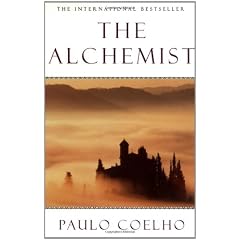
The Alchemist


I finished my first read of the year last night. It was completely refreshing. In the words of another critic, "The Alchemist is a beautiful book about magic, dreams and the treasures we seek elsewhere and then find at or doorstep". Coelho uses powerful and transparent symbols- a person's Personal Legend (destiny), the Hand that wrote all things (our Creator), omens, and the Soul of the World. Melchizedek and the Urim and Thummim make an appearance as well. A provocitive tension builds as a simple shepherd faces many not so simple choices to discover and realize his Personal Legend. The narrative is laced with parables and pointed wisdom. It was a good reminder.

There were two ideas that surfaced several times which I loved in particular. First, I believe in the philosophy that all of the events in life are connected. Every experience we have, every person we meet, and every success and failure are part of one great whole. This is something that I have come to love about life. Point in case: It is a miracle that Cori and I were in the same place at the same time for long enough to date and fall in love. And it was a complex string of seemingly unrelated choices, people, successes and failures in both of our lives that brought us there.

Secondly, I am impressed by the belief that when a person is in quest of his Personal Legend, all the forces of the universe conspire in that persons favor to steer him in the right direction and bring ultimate success. There have been plenty of times in my life that I would have argued that his was more idealistic than realistic. But, when I take a look at the big picture, any time I have spent in the valleys has been a means of bringing me to higher peaks.

This was a book that I enjoyed on every level. Intellectually, it was provocative. Spiritually, it was nourishing. Romantically, it was a fairytale.