The Phantom Tollbooth, Norton Juster
This is one of my favorite children's books. I read it every year or so. It is about a boy named Milo who is very dull and lazy. He receives a mysterious toll booth that takes him into a magical land. There he makes unexpected friends, explores strange places, and becomes a hero. It is full of witty quips. For example, expectations is an island to which one can inadvertently jump if he doesn't watch his words.
This time around, I thought it would be fun to read it to Grace. She was very keen on the idea due to the princesses, Rhyme and Reason, whom Milo is charged to rescue. The chapters are short and there are images on every two or three pages. A lot of the book is still over her head. She enjoyed it, but didn't always understand what was going on. We made it half way through before going back to our Beatrix Potter collection. Maybe next time.

Angels and Demons, Dan Brown
I hurried to library to check this out when I learned that the movie is coming out in the Spring. It was a fast read, just like The Da Vinci Code. It is well researched and laden with art history as is typical to Brown's writing. I was worried that the story line would be some big Catholic Church-demeaning web. But it wasn't. And I found the pivotal discussions about the compatibility of religion and science refreshing.
I WANT TO GO TO ROME and reading about the city's history and art collections left a pit of longing in my chest. One day we'll get there. I think the movie should be great. I'm predicting that Ewan McGregor will steal the show. (No offense, Tom.)
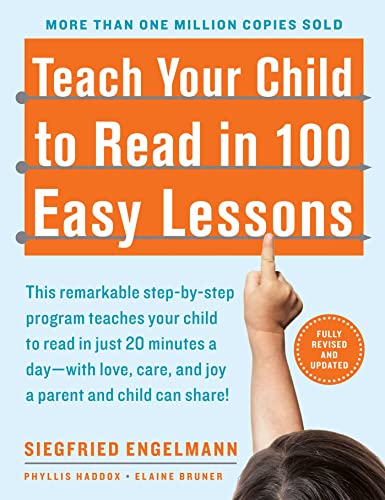
Teach Your Child to Read in 100 Easy Lessons, Siegfried Engelmann
Joanne recommended this book to me. She has done this program with three of her five children. I am anxious to follow her lead. Her kindergartner is currently reading Harry Potter, after all. This isn't to say that I'm pushing Grace to set academic records at her tender age. She started showing a lot of interest in reading, and I wasn't sure how to go about teaching her. We started out doing a lesson a day. As the lessons got longer, her attention span for them got shorter. So now we do 1 or 1/2 a lesson every other day or so. She focuses better. It has been rewarding to spend some one-on-one time with her in 'Mommy School.'
The method is the same as is used in the SRA program. When I told my mom about it, she asked, "Are you sure you want to be doing this?" I am a terrible speller and my kind mother has always blamed this on SRA. I told her that I wasn't too worried about it. Kids these days will always have access to a spell checker. And I'm banking on hopes that our kids have enough of their Dad in them. The man can spell anything and can spot a typo a mile away. It was always helpful and a little annoying to have him read my papers when we were in school. Back to the book, we are enjoying it so far. Grace is forever telling us what letter or sound a word starts with. Learning to read is already opening a new world to her.
Poems of Mao Tse-Tung, translation and notes by Hua-Ling Nieh Engle and Paul Engle
Cori chose this book on our last family trip to the library. I had no intention of picking it up. But then I ran out of books and had a hankering to read one night. It was more interesting than I thought possible. When I think of Chairman Mao, I think of titles like totalitarian and utilitarian. Not poet. Apparently, he was a man of many dichotomies. I don't know if what I read about him in this book made me think more or less of him. That he had great regard and passion for the arts is prooven in his mastery over the classical Chinese poetic form. It is very complex and embraces hundreds of rules. All of his poetry is crafted with precise and artful use of this form. Regarding art, Mao said, "Although man's social life is the only source of literature and art and is incomparably livelier and richer in content, the people are not satisfied with life alone and demand literature and art as well. Why? Because, while both are beautiful, life as reflected in works of literature and art can and ought to be on a higher plane, more intense, more concentrated, more typical, nearer the ideal, and therefore more universal than everyday life." This is, to me, a great definition of what art should be.
However, as he grew in power and influence, his philosophy of art shifted. He said, "There is in fact no such thing as art for art's sake, art that stands above classes or art that is detached from or independent of politics." Therefore, all art was meant to serve the revolution and appeal to the "masses." His poetry seems contradictory to me of the proclaimed purpose of art in his communist philosophy as it was made unintelligible to the masses by his vocabulary and use of ancient form. Mao had it both ways. This is indicative of so many other aspects of his regime. It made his poetry more interesting to me.
In this book there is a great introduction to each poem that sets up what is happening historically and also points out symbols. Even in translation, the poems have grace, restraint, and power. That such sentiments could come from one that led the Great Leap Forward and then permissively stood by the Cultural Revolution is boggling. The book was a surprising read.